The Brand Marks of a Christian - Galatians 6:14 & 17 - by Bro. Kennon Roark
Upgrade your Flash Player to version 8 to view this video! (Click here for the download)
Best way to put videos on the internet
Best way to put videos on the internet
Note: Verses and commentary extracted using http://www.wordsearchbible.com/]
The Brand Marks of a Christian
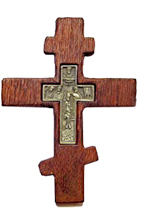
Galatians 6:14 (KJV)
14 But God forbid that I should glory, save in the cross of our Lord Jesus Christ, by whom the world is crucified unto me, and I unto the world.
Pulpit Commentary, The - The Pulpit Commentary – Volume 20: Galatians-Colossians.
The cross of Christ.
I. THE CROSS AS AN OBJECT OF GLORYING.
1. St. Paul can glory in nothing else. Yet he had whereof to glory. His birth, his education, and his religious devotions had been sources of pride to him. His Christian attainments, his apostolic authority, his missionary triumphs, and his brave endurance of persecutions, might be taken as reasons for self-glorification. But he rejects the whole. Plainly no Christian inferior to St. Paul can have anything in himself to be proud of.
2. The glorying only begins in looking away from self to Christ. Men talk of glorying in their crosses. But St. Paul boasted, not in his own cross, but only in the cross of Christ. He made nothing of his sufferings for Christ; all his interest was absorbed in Christ's sufferings for him. All the brightness of Christian experience centres in Christ.
3. The grand source of glorying is the cross of Christ. The cross was the symbol of shame; it has become the token of what we most reverently adore. So complete is the transformation of ideas that we can with difficulty understand the paradox as it would strike the contemporaries of St. Paul when he spoke of glorying in the cross. It is as though we spoke of priding ourselves on the gallows. This cross, this instrument of shameful death has become the emblem of Christianity. Gleaming in gold on the spires and domes of our cathedrals, it typifies the most vital truth of Christianity. The glory of the cross is not a merely mystical sentiment. It springs from evident facts:
(1) the fidelity of Christ as the good Shepherd, who would not forsake the flock and flee before the wolf;
(2) the patience, gentleness, and forgiving spirit of Christ on the cross; but
(3) chiefly the love of Christ in suffering shame and anguish and death for us. There are some who would dispense with the doctrine of the cross; but a crossless Christianity will be a mutilated, impotent gospel, robbed of all efficacy, shorn of all glory.
II. THE CROSS AS AN INSTRUMENT OF DEATH. The cross does not change its nature by winning its glory. Still, it is a cross — tool of pain and death. It is no less than this to the Christian as it was no less to Christ. For Christianity is not a calm acceptance of what Christ has done in our stead; it is union with Christ, first in his death and then in his victory.
1. The cross means the death of the world to us. Before that glory of Divine love in human passion all lesser lights fade and perish. As we look upon the cross the world loses its hold upon us. In the vision of truth and purity and love even to death, the threats of the world's hurts lose their terror and the fascinations of its pleasures their charm.
2. The cross means our death to the world. Joined with Christ by faith, we have the old self killed out of us. Hitherto the power of the lower world has dragged us down to sin and trouble. But in proportion as we are united to the Crucified we cease to have the feelings and interests which chain us to the earthly. St. Paul describes a magnificent ideal. No man on earth has fully realized it. It must be the aim of the Christian more and more to be one with Christ, that the cross may pass more deeply into his soul till all else melts and fades out of experience.
These two aspects of the cross — its death-power in us, its glory in Christ — are directly related. For it is only after it has been the instrument of death to us that we can rise in the new life and see it as the one absorbing object of glory. — W.F.A.
Pulpit Commentary, The - The Pulpit Commentary – Volume 20: Galatians-Colossians.
Galatians 6:17 (KJV)
17 From henceforth let no man trouble me: for I bear in my body the marks of the Lord Jesus.
Verse 17
Pulpit Commentary, The - The Pulpit Commentary – Volume 20: Galatians-Colossians.
The stigmata.
I. THE APOSTLE IS THE SERVANT OF CHRIST. The stigmata are the brands, the name of the master burnt on the slave. The most honoured of the apostles regards himself as the branded servant of Christ. To no higher honour can any Christian aspire. Christianity is living, not for self, but for Christ. We must all understand that Christ stands to us in the relation of a Master. Our part is to submit to his will. The supreme and peculiar Christian duty is obedience to Christ (John 14:21).
II. THE TRUE SERVANT OF CHRIST BEARS THE HARK OF HIS MASTER. St. Paul bore on his body the scars of the sufferings he had endured in the service of Christ. These plainly marked him as Christ’s. Christians must all bear indications of Christ on their lives. It may be granted that St. Francis was none the better for having the wound-marks as of the nails of the cross in his hands and feet. Yet this strange condition was the last proof of his passionate identification of himself with Christ in thought and will and affection. So the Christian must ever have the Name of Jesus upon him in the Christ-likeness of his life. It is useless to have it merely on the tongue; it must be on the body, i.e. on the life.
III. THE MARKS OF CHRIST COME THROUGH SUFFERING FOR CHRIST. Thus St. Paul received his. They were brands burnt in by fiery trials. Suffering for Christ proves our fidelity to him and brings out our Christ-likeness of character. They who are like the rocky soil and receive the Word with joy, but cannot withstand persecution, may sing of the sweetness of the Name of Jesus in sentimental hymns; but they have no such Name branded on their persons. After all their enthusiasm has evaporated, we see nothing but self left. The Christian must deny himself for Christ. His life may not be so hard as St. Paul’s. Rarely has such hardship been known as the great apostle endured; rarely have the brands been burnt so deep with such cruel fires. Yet all must have an experience that is similar in kind, though perhaps far less in degree. The sufferer, however, may console himself with the thought that the more fiery the trial he endures for Christ becomes, the deeper will be the sacred marks of the Name of Jesus upon him. For nothing makes us so Christ-like and nothing binds us so near to Christ as patient suffering and toil for his sake. This suggests the fear that it is no easy thing to be a Christian. Certainly to be a true Christian such as St. Paul was is not easy; it is the depth of self-renunciation and the height of arduous fidelity. Count the cost, then. Look at the irons ready to brand the Name of Jesus before consenting to become his servant. But look also on the other side, at what he suffered for us and at the glory of his service.
IV. THE BRANDS OF SERVICE SHOULD BE THE SECURITY OF THE SERVANT OF CHRIST. With such marks upon him, how dare any man trouble the apostle by questioning his authority? Suffering for Christ should be a confirmation of our faith to others. It should also be a security against the danger of unfaithfulness. How can he who bears the Name of Jesus thus conspicuously burnt in by hard trial and long service forsake his Master? Such brands should be eternal. — W.F.A.
Pulpit Commentary, The - The Pulpit Commentary – Volume 20: Galatians-Colossians.
Everyone has marks that identify what they are. A Stigma is a brand mark. K.R.
1 Peter 1:23 (KJV)
23 Being born again, not of corruptible seed, but of incorruptible, by the word of God, which liveth and abideth for ever.
John 10:10 (KJV)
10 The thief cometh not, but for to steal, and to kill, and to destroy: I am come that they might have life, and that they might have it more abundantly.
1 John 5:12 (KJV)
12 He that hath the Son hath life; and he that hath not the Son of God hath not life.
John 11:25 (KJV)
25 Jesus said unto her, I am the resurrection, and the life: he that believeth in me, though he were dead, yet shall he live:
2 Corinthians 4:10 (KJV)
10 Always bearing about in the body the dying of the Lord Jesus, that the life also of Jesus might be made manifest in our body.
John 1:1 (KJV)
1 In the beginning was the Word, and the Word was with God, and the Word was God.
Acts 17:25 (KJV)
25 Neither is worshipped with men's hands, as though he needed any thing, seeing he giveth to all life, and breath, and all things;
Galatians 2:19-20 (KJV)
19 For I through the law am dead to the law, that I might live unto God.
20 I am crucified with Christ: nevertheless I live; yet not I, but Christ liveth in me: and the life which I now live in the flesh I live by the faith of the Son of God, who loved me, and gave himself for me.
Colossians 3:4 (KJV)
4 When Christ, who is our life, shall appear, then shall ye also appear with him in glory.
1 John 1:5 (KJV)
5 This then is the message which we have heard of him, and declare unto you, that God is light, and in him is no darkness at all.
Isaiah 5:20 (KJV)
20 Woe unto them that call evil good, and good evil; that put darkness for light, and light for darkness; that put bitter for sweet, and sweet for bitter!
John 15:3 (KJV)
3 Now ye are clean through the word which I have spoken unto you.
Ephesians 5:26 (KJV)
26 That he might sanctify and cleanse it with the washing of water by the word,
Proverbs 3:5-6 (KJV)
5 Trust in the LORD with all thine heart; and lean not unto thine own understanding.
6 In all thy ways acknowledge him, and he shall direct thy paths.
====================================================================================================
The Mark's of a Christian.....
I. Life:
a. Quality of Life: --- eternal
b. Quantity of Life: --- everlasting
c. Quota of Life: --- enjoyable
II. Light:
a. It gives Discernment:
b. It gives Direction:
c. It gives Discipline:
III. Love:
a. Love for the Saint's
b. Love for the Scriptures
c. Love for the Sinner
d. Love for the Savior
===================================================================================================
Four things the Christian person must love:
1. The Christian must love the Saints.
1 John 4:7 (KJV)
7 Beloved, let us love one another: for love is of God; and every one that loveth is born of God, and knoweth God.
John 13:34-35 (KJV)
34 A new commandment I give unto you, That ye love one another; as I have loved you, that ye also love one another.
35 By this shall all men know that ye are my disciples, if ye have love one to another.
2. The Christian must love the Scriptures:
Matthew 4:4 (KJV)
4 But he answered and said, It is written, Man shall not live by bread alone, but by every word that proceedeth out of the mouth of God.
3. The Christian must love the Sinner:
2 Peter 3:9 (KJV)
9 The Lord is not slack concerning his promise, as some men count slackness; but is longsuffering to us-ward, not willing that any should perish, but that all should come to repentance.
1 Timothy 1:15 (KJV)
15 This is a faithful saying, and worthy of all acceptation, that Christ Jesus came into the world to save sinners; of whom I am chief.
4. The Christian must love the Savior.
====================================================================================================
The Fig Tree mentioned in the New Testament is a symbol for the Nation of Israel